PATTERNS FOR CUTTING AND FINISHING FASHIONABLE GARMENTS.
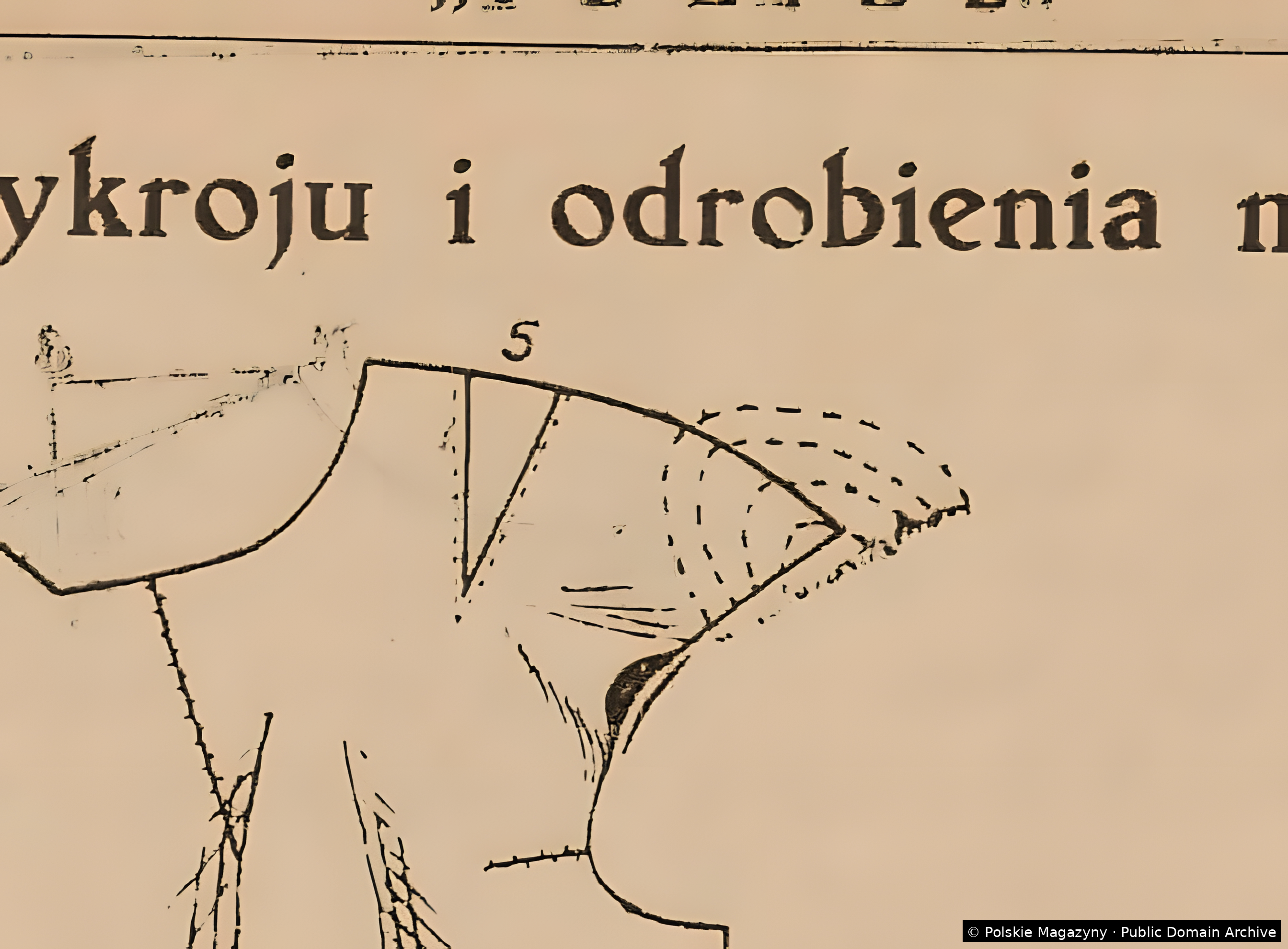
Fig. 2 Finishing the padding for a broad chest at the shoulder: A gusset is sewn into mark 5, and a piece of fabric is inserted in the center of the chest, which is then stretched along the grain when pressed with an iron. Similarly, the material itself is pressed along the chest line.
Fig. 3 Fig. 3 illustrates the internal finishing of fashionable garments.
Fig. 1 Fig. 1 shows the pattern for cutting fabric for broad shoulders and a wide chest.
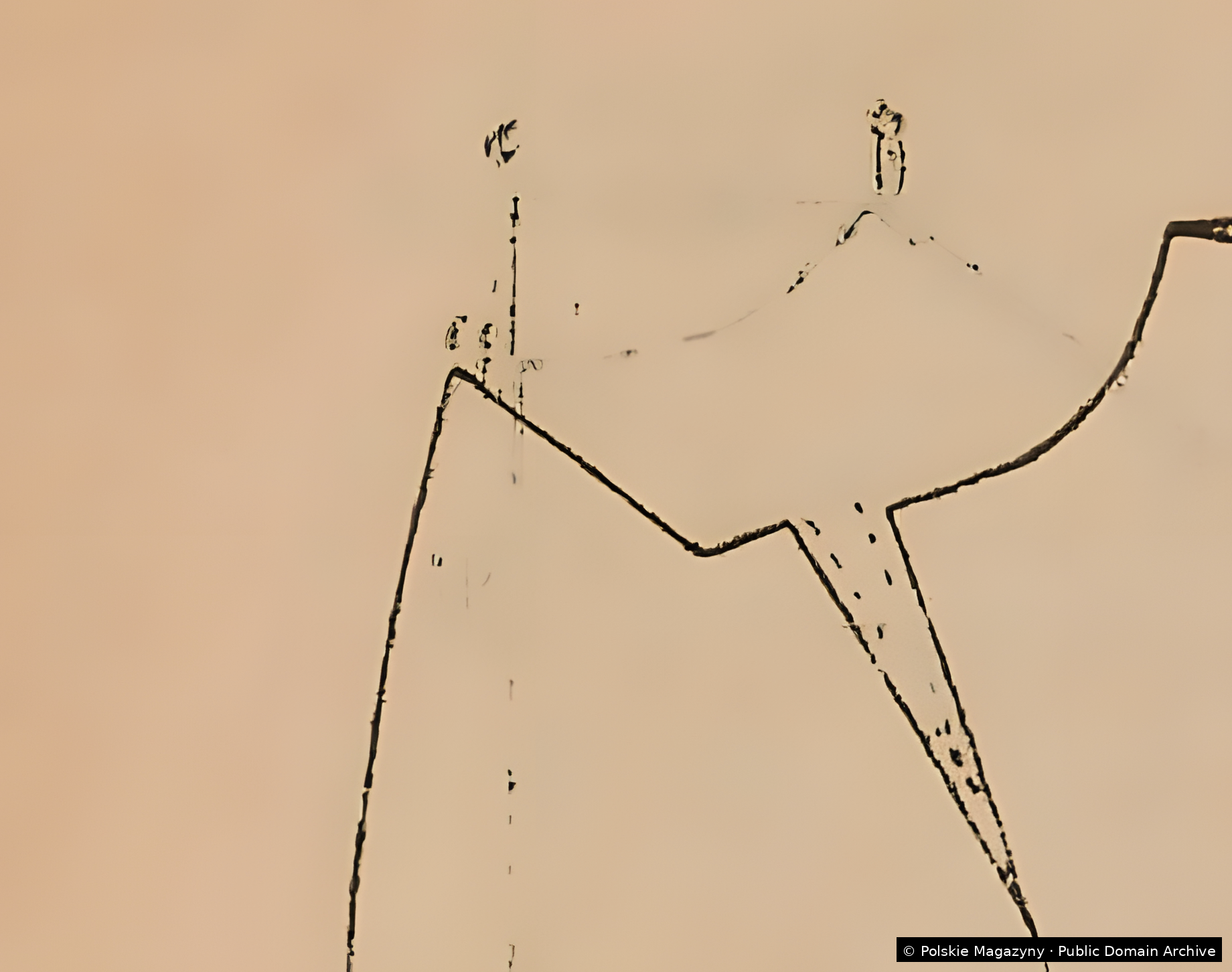
Fashionable breeches, laced below the knees at the front.
Pattern for raising the sleeve cap for high shoulders, relative to the number of wadding layers. For 4 layers of wadding, raise the sleeve cap by 1 cm; for 6 layers of wadding, by 1 1/2 cm, and so on, proportionally. This allows the sleeve to hang better, and the garment gains in appearance (see the jacket illustration).
A very fashionable jacket, with high seams and a nipped-in waist. To achieve such a garment, it’s not enough to rely solely on finishing; one must start with the foundation by taking precise measurements and understanding the body shape, then applying changes to the cut—whether in the sleeve, shoulders, or waist. The padding and its finishing are crucial, acting as the garment’s soul. Next comes the special placement of wadding, as seen in figure three, and finally, basting the sleeve and pressing it on a good tailor’s ham.